Curriculum Information
Curriculum Overview
Our Mission
At Parkland Primary School we believe that every child and adult in our school community should have Limitless Learning opportunities. We believe that we all have the ability to succeed and we strive to ensure that our children can discover their full potential through access to an ambitious and coherently planned curriculum that leads to deep learning and an understanding of a sustainable world.
Our Values: Grow, Believe, Achieve, Succeed
Our curriculum has been written to develop children who:
- Are successful learners
- Are confident learners
- Are responsible citizens
This is the philosophy of how we want to work and learn. These aims underpin all of the learning that takes place in our school.
Click on the link to see our Curriculum Statement to gain a greater understanding of our curriculum intent, implementation and impact.
Characteristics of Learning
At the heart of our curriculum are the following seven characteristics of learning developed through the Route to Resilience programme which began in 2018. These feature in our planning, the wider ethos of the school and the way that children talk about their learning.
- Perseverance
- Enthusiasm
- Curiosity
- Hope
- Gratitude
- Self-control
- Social Skills
Technology-Enhanced Learning
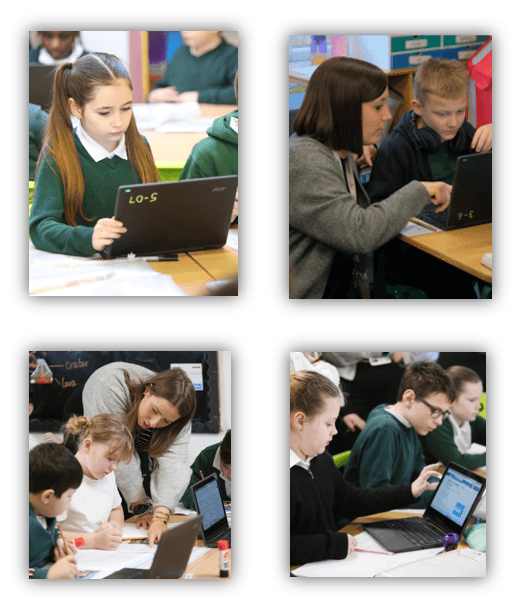
At Parkland Primary School, we use technology carefully and purposefully to support children’s learning, wellbeing and inclusion. This approach is known as Pedagogical Technology (PedTech).
PedTech means using technology only where it helps children learn better. It is not about increasing screen time, but about choosing the right tools to support high‑quality teaching, creativity, independence and accessibility.
A Microsoft Showcase School
Parkland Primary School is proud to be a Microsoft Showcase School. This national status recognises schools that use technology thoughtfully and effectively to improve teaching and learning.
Being a Microsoft Showcase School shows our commitment to:
- High standards of teaching and learning
- Inclusion and accessibility for all pupils
- Preparing children with the digital skills they need for the future
How technology supports learning
We use a range of Microsoft tools to support learning in age‑appropriate ways:
- Microsoft OneNote helps teachers share learning clearly and consistently, particularly in foundation subjects. Children can access resources, examples and guidance that support their learning in class.
- Microsoft Forms is used for quick checks and practice activities, helping teachers see what children understand and plan next steps.
- Microsoft Reflect supports children’s wellbeing by giving them a safe way to share how they are feeling. This helps staff provide timely support where needed.
Technology is always used alongside high‑quality teaching, discussion, practical work and play. It never replaces the important role of adults in the classroom.
Devices in school
Access to devices is carefully planned to match children’s age and stage of development.
- In Key Stage 2, children use 1:1 devices to support learning, collaboration and independence. These are used during lessons where technology adds value, for example through research, writing, assessment or guided practice.
- In Key Stage 1 and Early Years, children use tablets in short, purposeful ways to support early learning, communication and exploration. Hands‑on learning, talk, play and adult interaction remain central.
A balanced approach to screen time
We understand that parents may have concerns about screen time. At Parkland:
- Technology use is planned, supervised and purposeful
- Children are not using devices all day
- Learning remains active, social and varied
Our approach is regularly reviewed to make sure technology supports learning and wellbeing in the best possible way.
Supporting all learners
PedTech helps us to:
- Support children with additional needs
- Improve access to learning
- Provide timely feedback and support
- Promote independence and confidence
Staff receive ongoing training and support so technology is used consistently and effectively across the school.